






Back
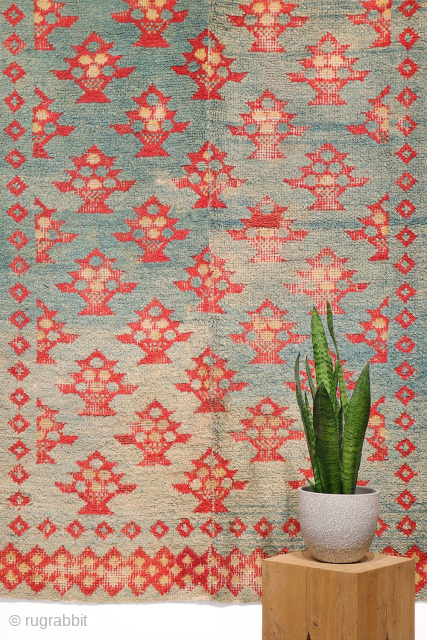
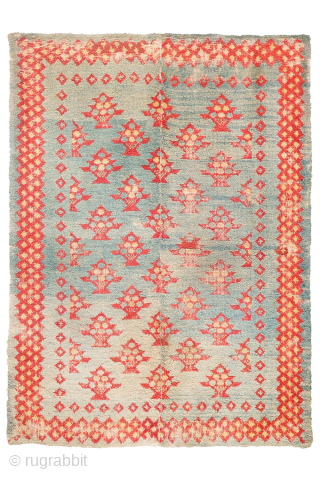
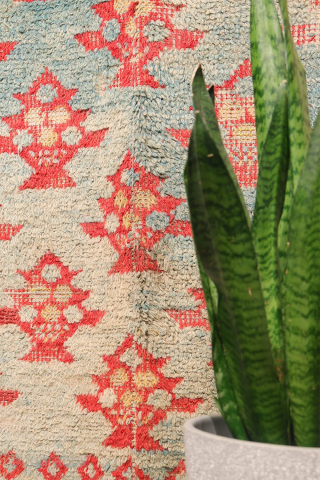
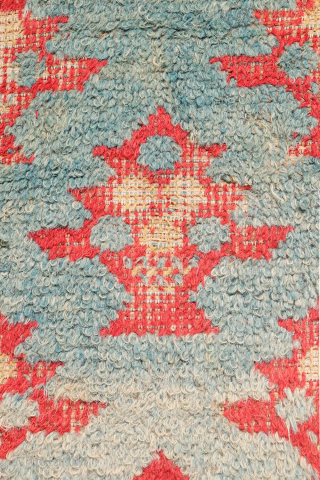
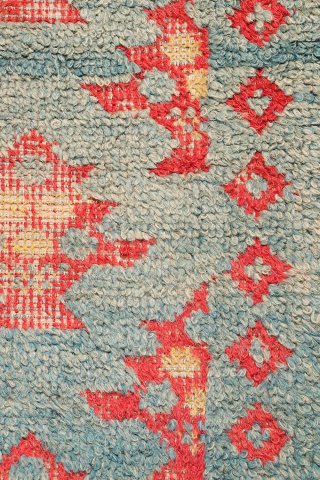
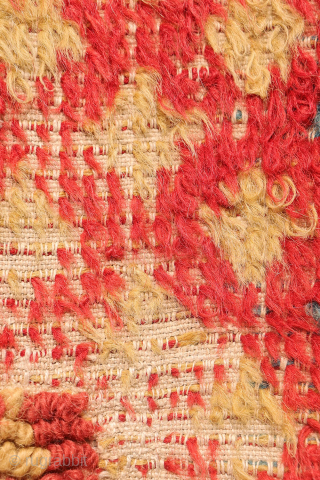
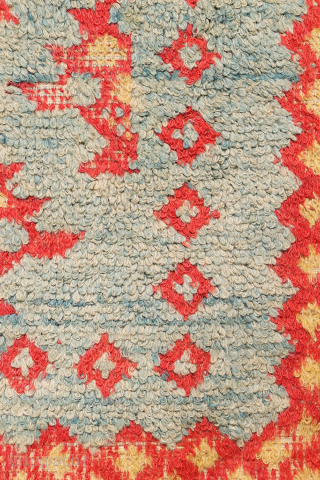
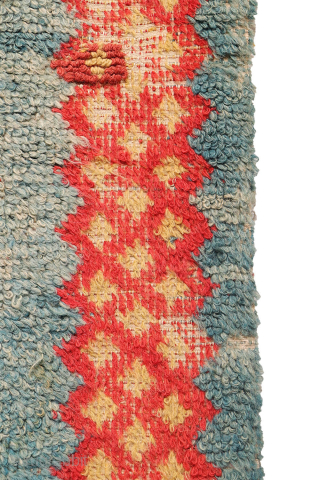
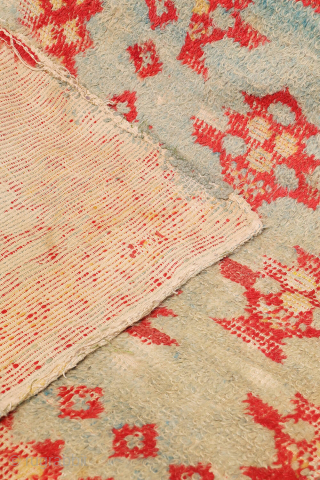
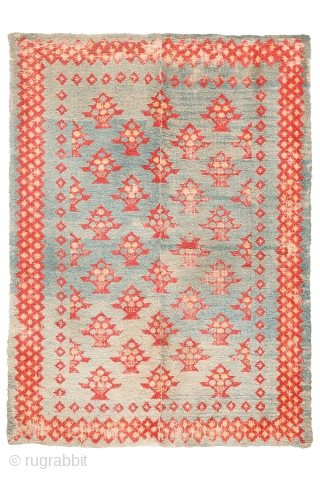
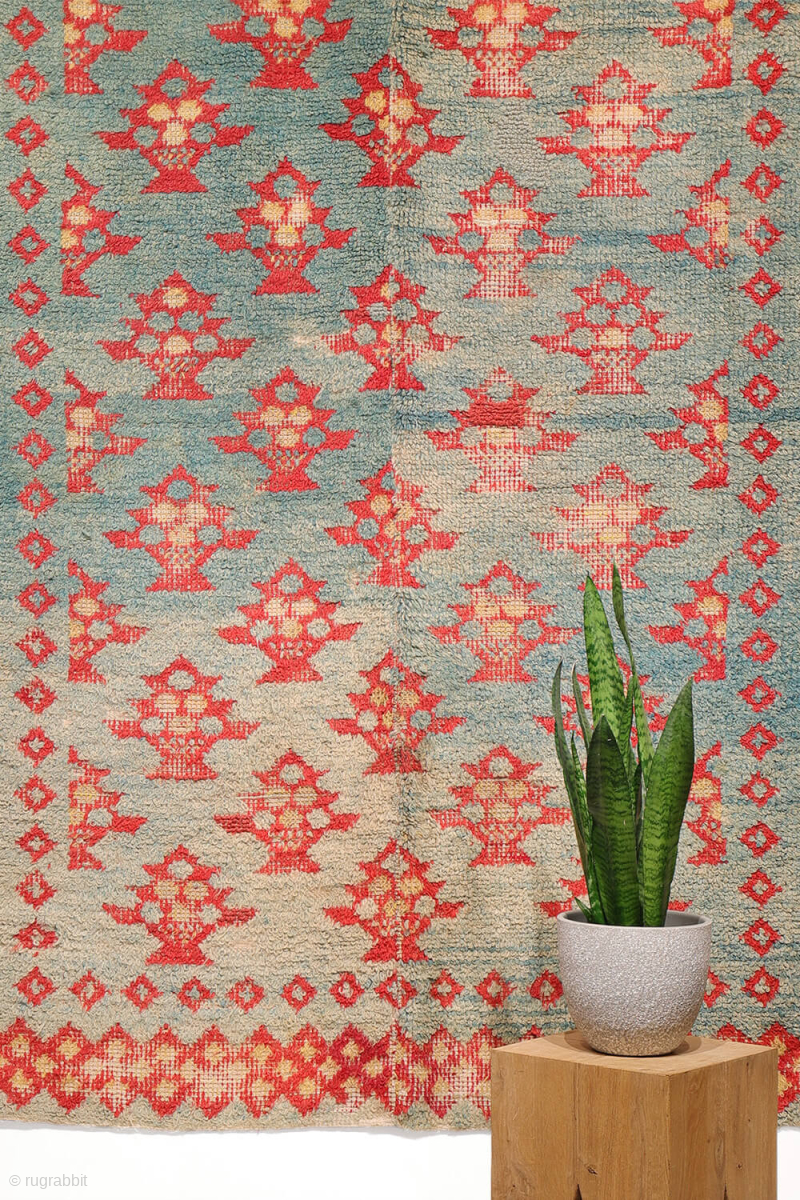
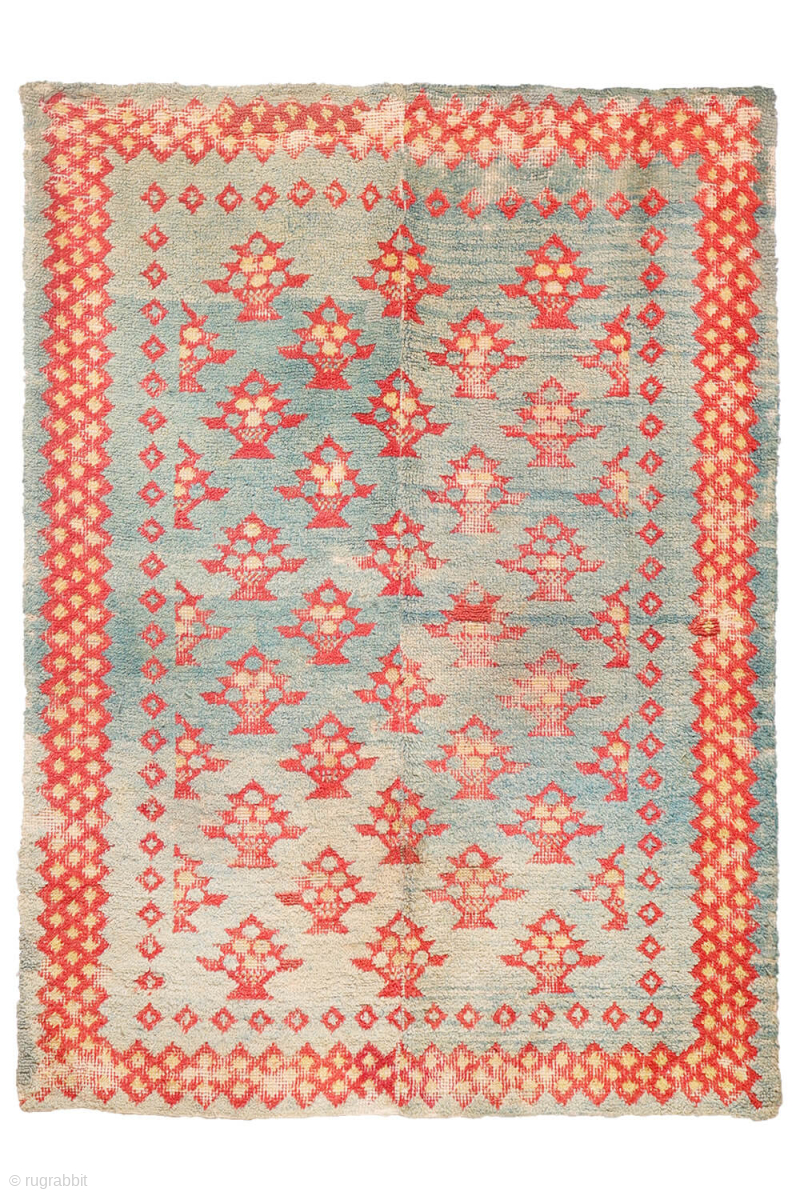
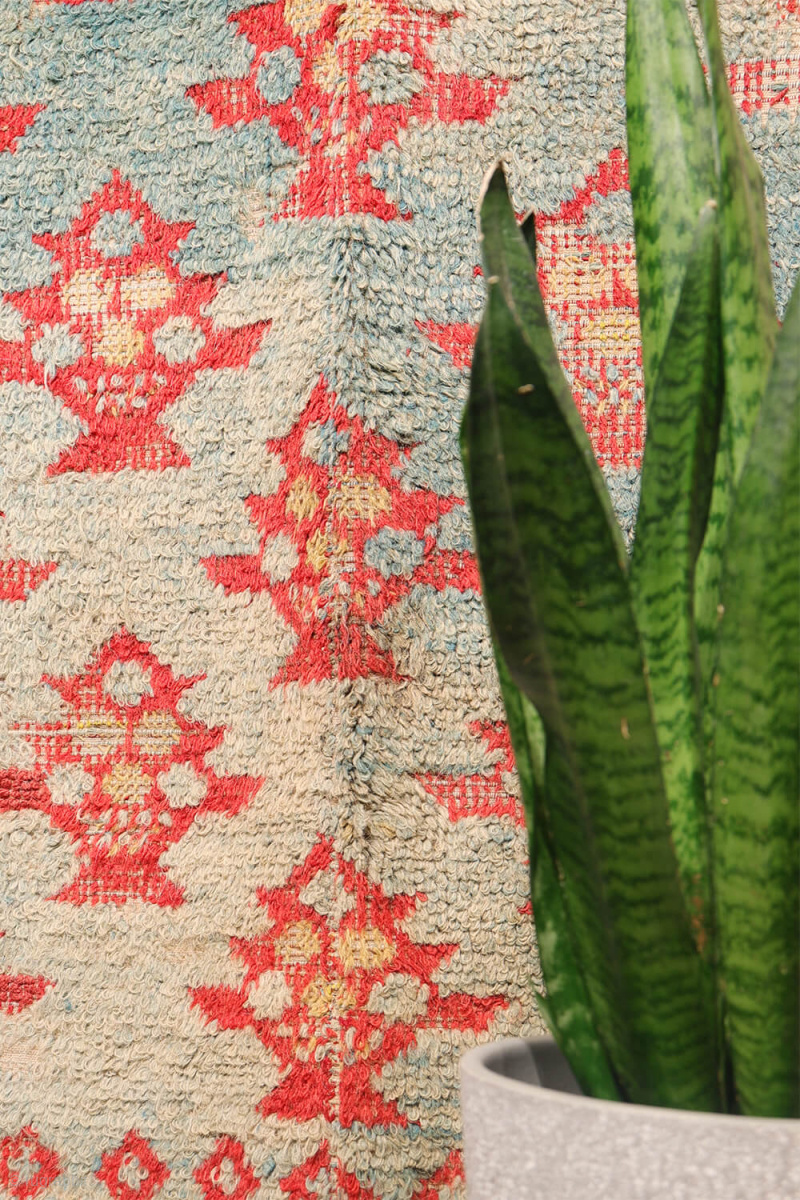
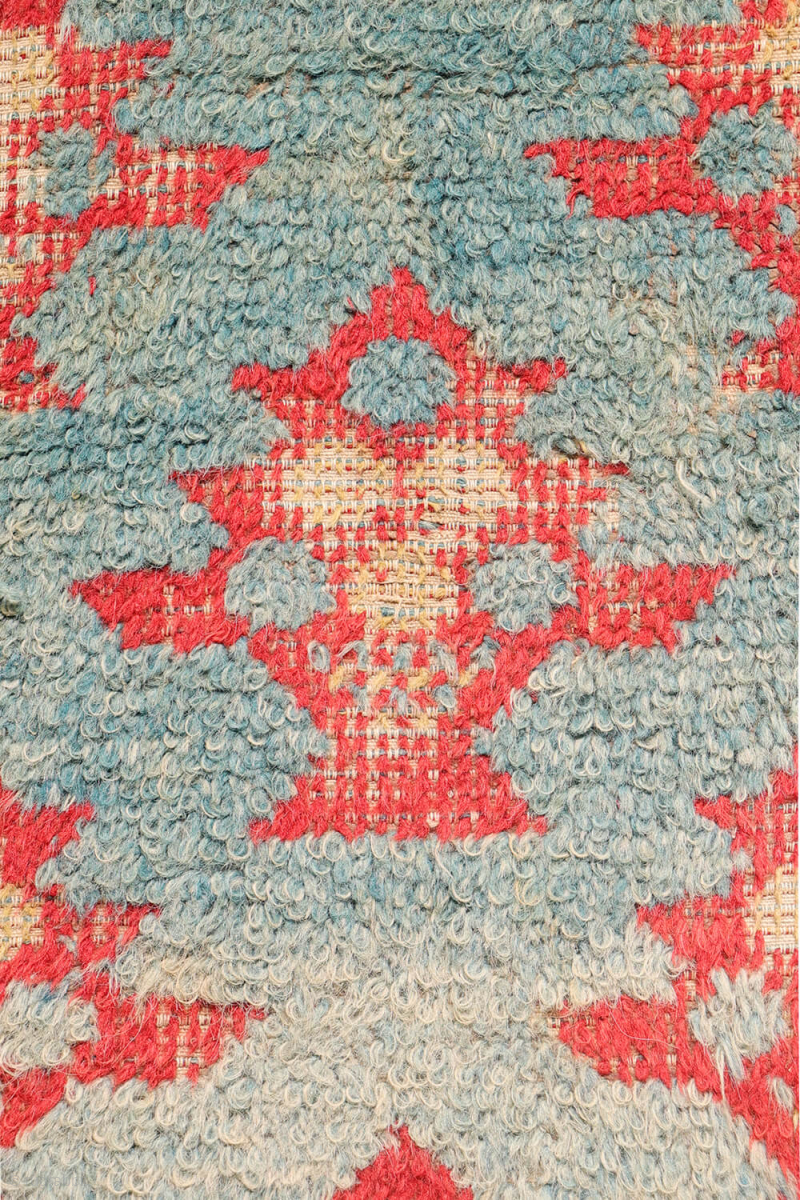
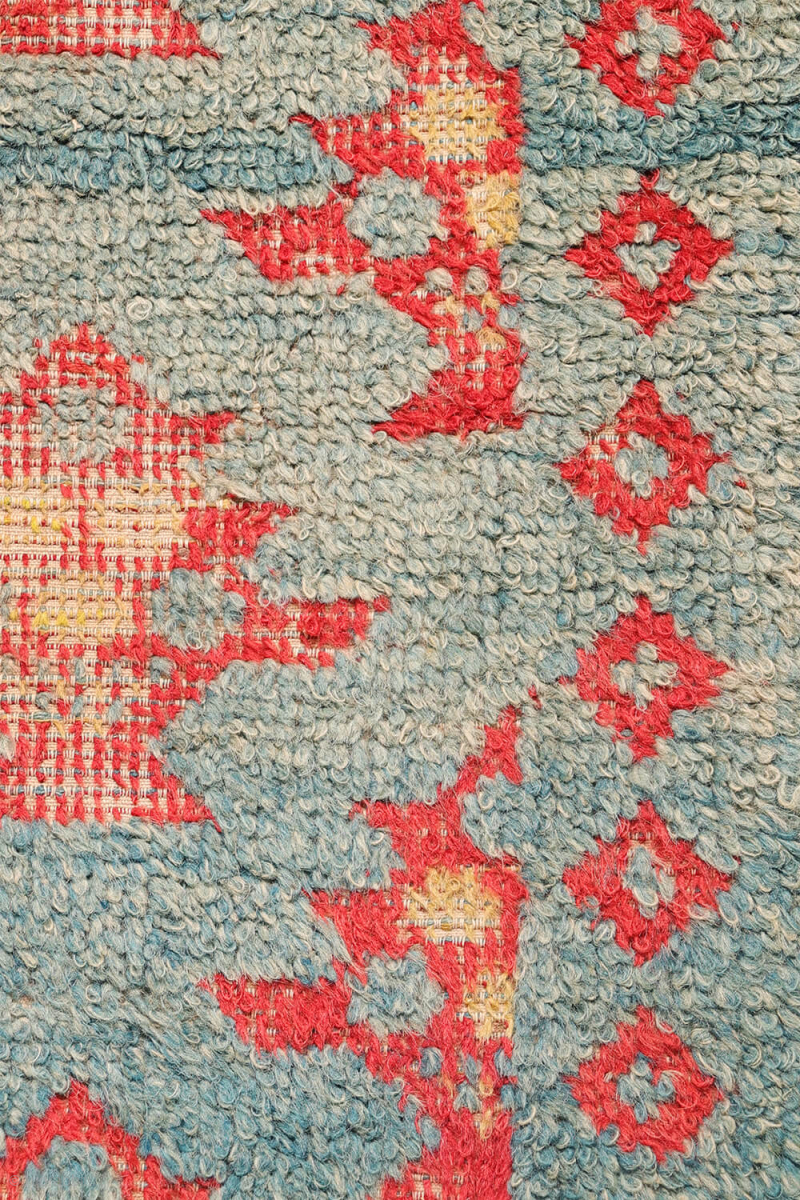
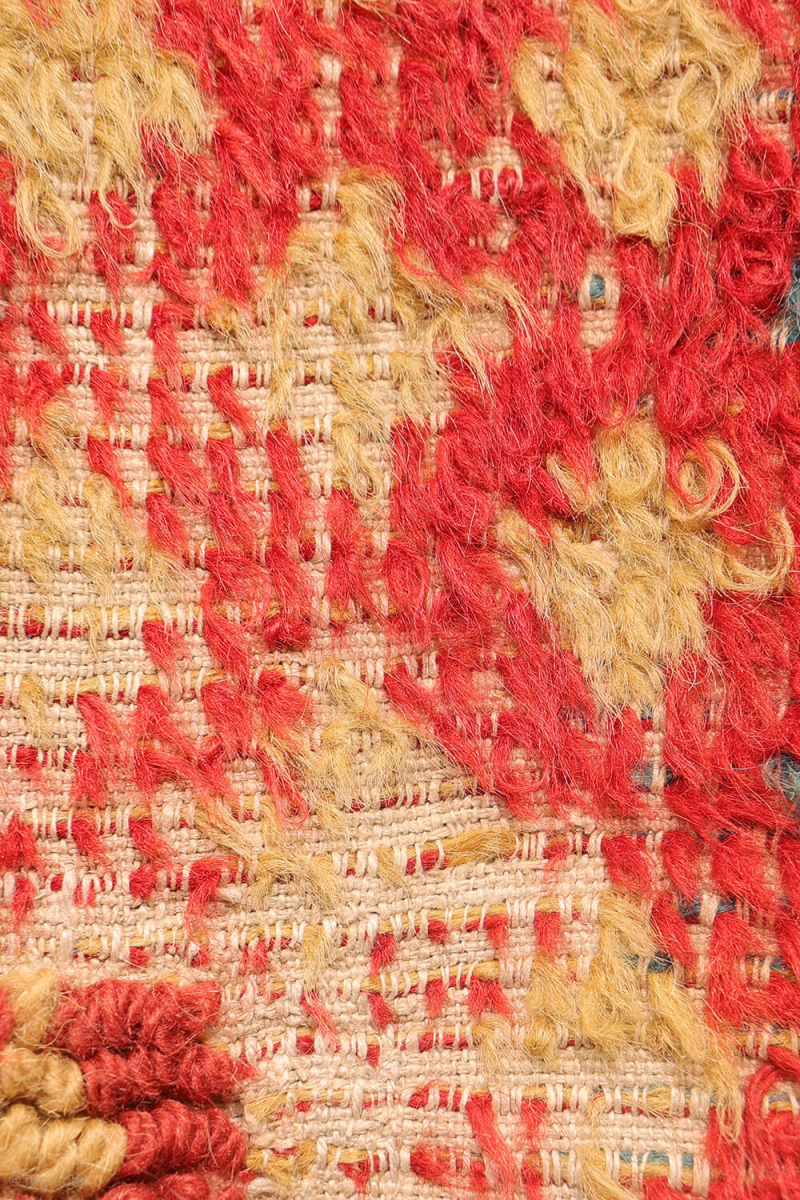
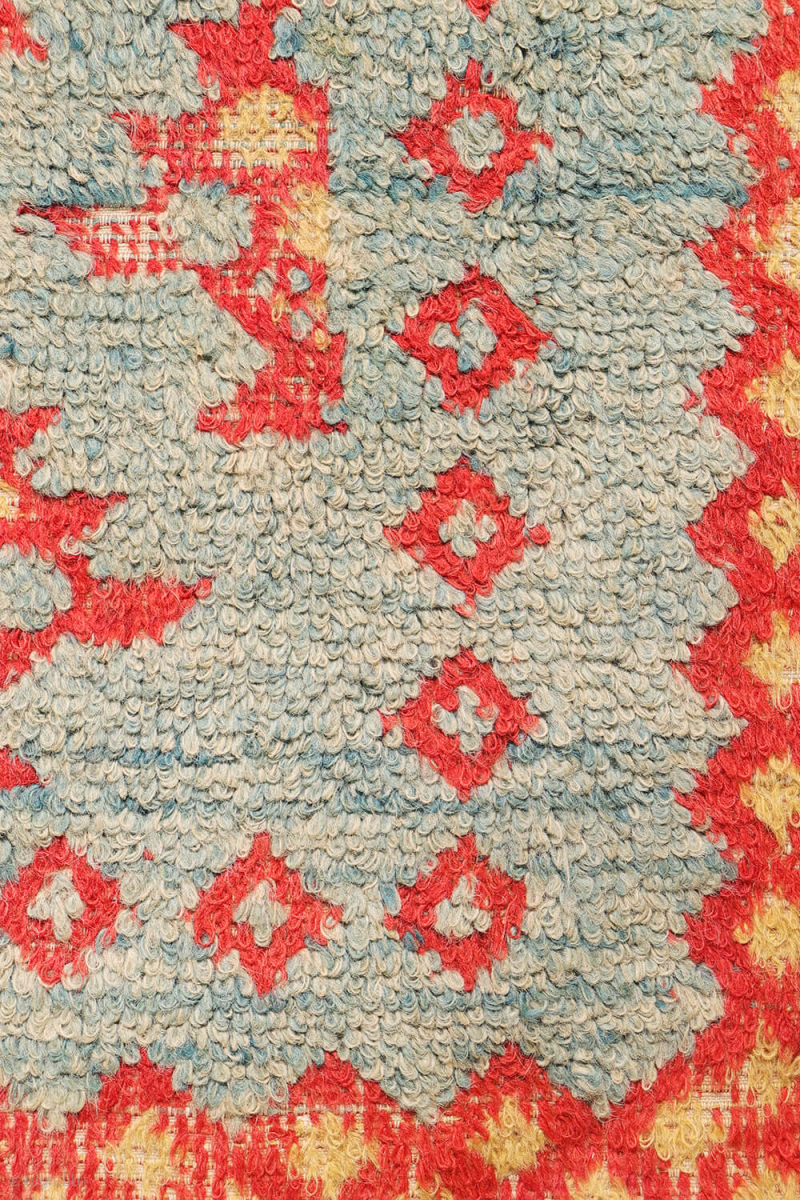
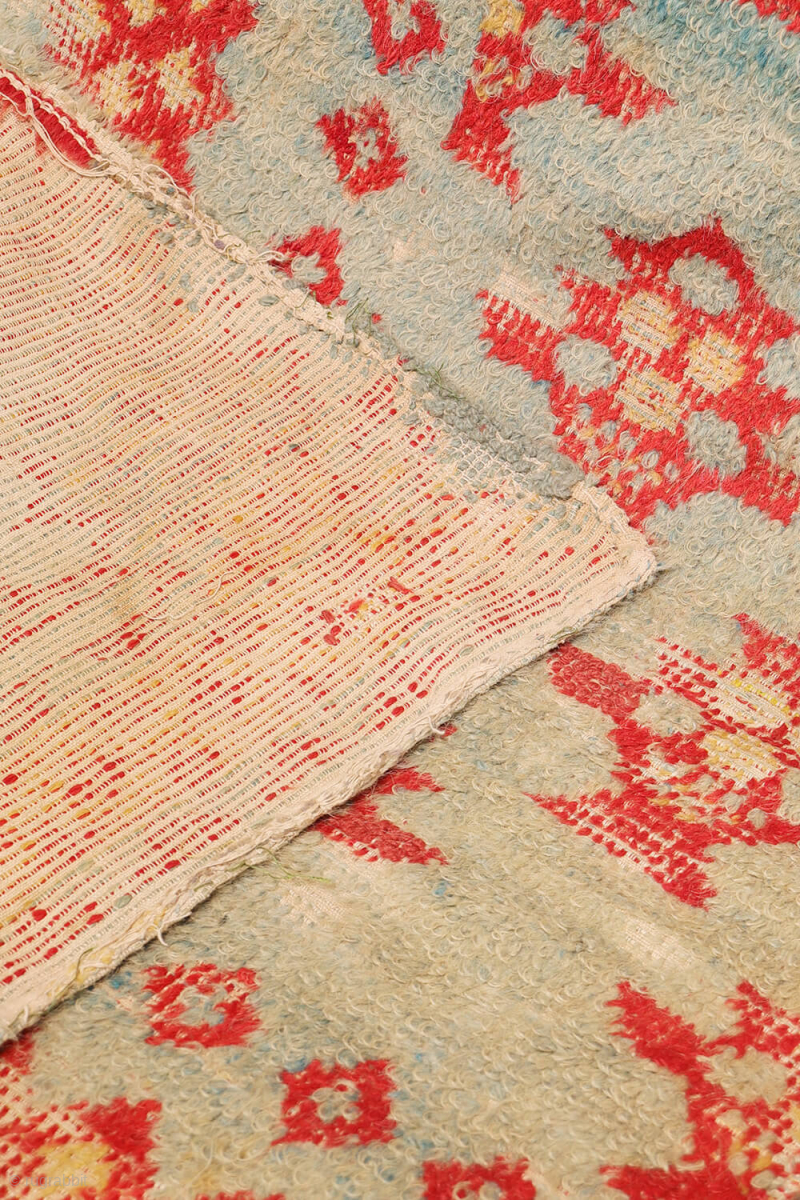
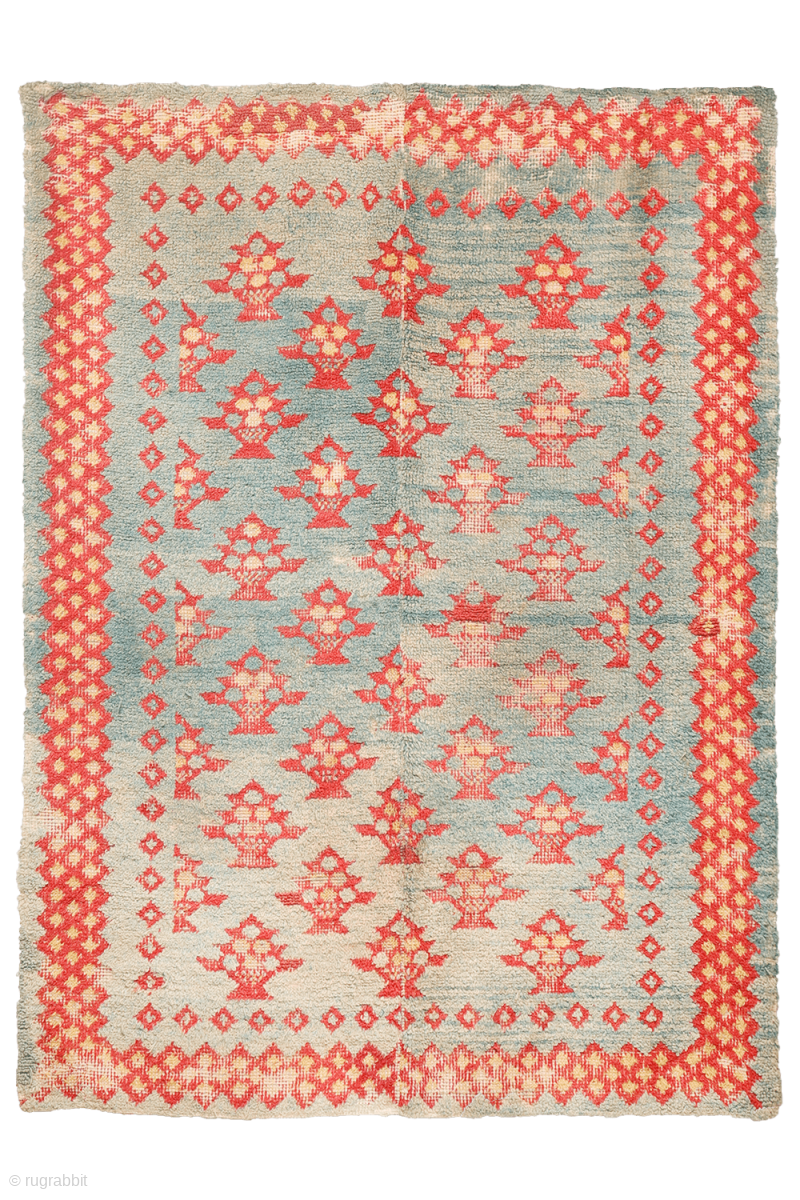
¡Hola! a rare early 19th century, or even 18th century, antique Alpujarra rug from Granada, Spain, woven with the traditional looped technique on a linen base. It is very rare to find an antique Alpujarran rug with this baby blue colour, which showcases an incredible abrash or colour changes within the blue colour. The blue colour is strongly associated with the Islamic tilework in Spain.
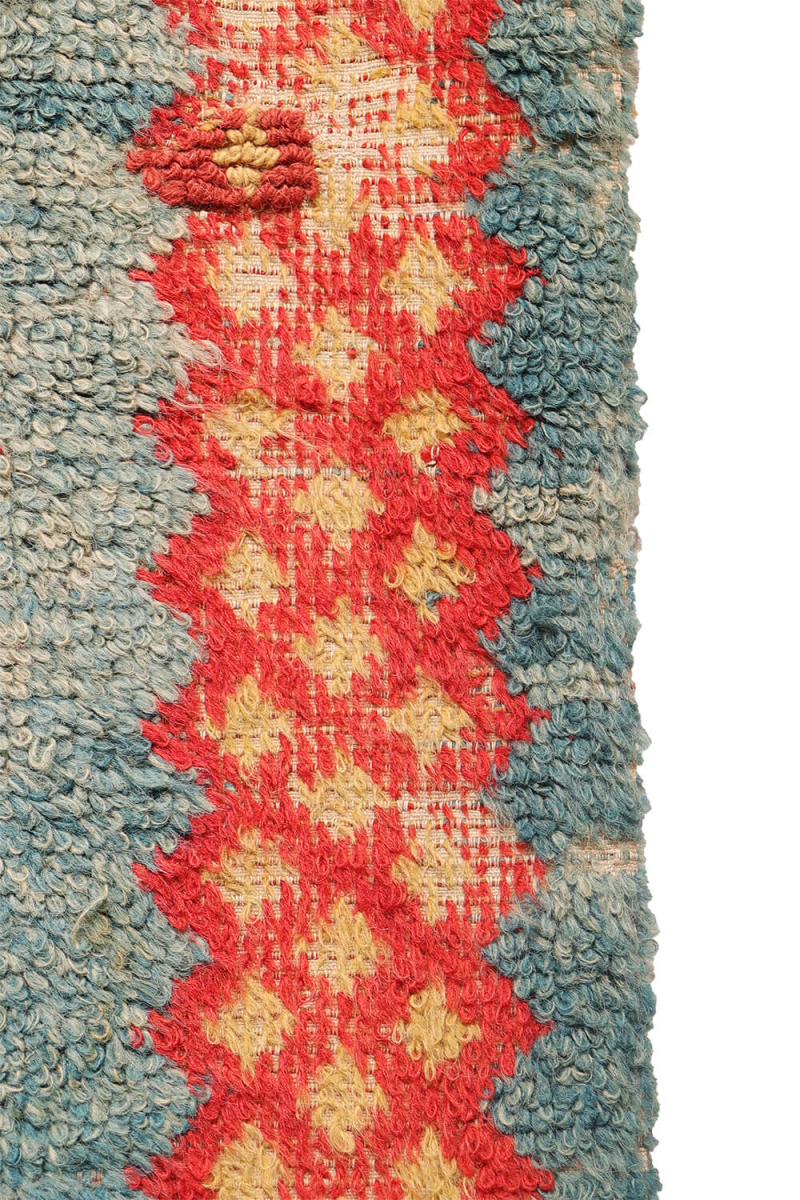
The composition is arranged with a series of lively coloured vases that hold either fruit or flowers. The border follows more the Andalusian Islamic patterns than the central field.
This piece has some worn areas, some repiling and repairs, but overall is in good condition giving the age.
You canbuy this rug directly from our web: https://www.nomada.biz/en/producto/antique-alpujarra-rug-from-granada-sp...
According to historical studies on Andalusi textiles and the carpets of La Alpujarra the so-called Alpujarra carpets belong to a rural craft tradition that developed between the late Middle Ages and the nineteenth century and preserves a strong influence from the cultural legacy of Al‑Andalus since many researchers trace the origins of this type of weaving to techniques and decorative motifs introduced by Muslim populations who remained in the region after the Christian conquest of 1492 and whose material culture continued to influence local craft practices for centuries academic studies explain that these carpets were made with wool woven over a textile foundation using a loop-pile technique and were often produced in several narrow strips that were later sewn together because domestic looms were small and limited in width and the designs usually feature geometric or floral patterns with strong colors such as green red and yellow elements that scholars often associate with Islamic artistic traditions that persisted even after the expulsion of Muslims from Spain in 1609 demonstrating how Andalusi material culture continued to shape rural communities in the region for centuries and how these carpets today represent an important testimony of the encounter between Islamic heritage and European rural textile traditions in the history of Andalusia.
The carpets of La Alpujarra were used mainly as functional and decorative elements in the home, not only as floor coverings but also as bedspreads or blankets in some rural houses, especially in winter, since the wool provided warmth and insulation. They were also used as throws on benches, chairs, or to cover delicate objects to protect them from dust. In some cases, they were hung on walls for decoration and insulation, showcasing their geometric designs and vivid colors. Additionally, they were used on special occasions or during ceremonies such as weddings or local festivals, reflecting both practical utility and the aesthetic heritage inherited from the Muslim legacy in their techniques and ornamentation, thus combining function, beauty, and cultural tradition in the everyday life of Alpujarra families.